
HOW TO KEEP YOUR OLDER DOG OR CAT HEALTHY AND COMFORTABLE
Getting older is a natural part of life – and our pets are no different. While some changes are a normal part of ageing, it is important not to assume that every change in an older pet is simply “because they’re getting old.”
Many age-related conditions can be managed or treated, helping older dogs and cats stay comfortable, active and happy for longer.
Regular health checks can also help identify problems earlier, before they have a significant impact on your pet’s quality of life.
At Oakhill Vets, we recommend paying particular attention to your pet’s mobility, weight, grooming, teeth, nails, blood pressure, sight and hearing, as well as keeping up with preventative healthcare.
What age is a senior pet?
There is no single age at which every dog or cat becomes a senior. Ageing varies depending on factors such as species, breed, size and individual health.
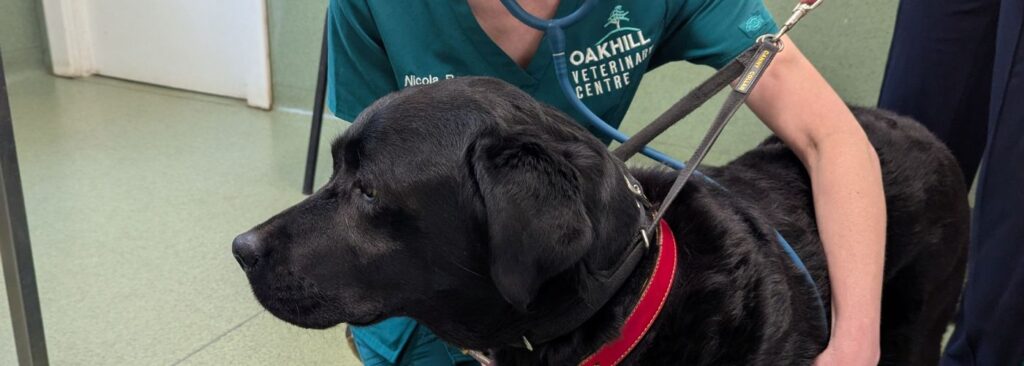
As a general guide, we recommend a free Senior Pet Check for dogs aged 8 and over and cats aged 10 and over at Oakhill Vets. Our veterinary nurses can perform a nose-to-tail examination, weight check, urine test and blood pressure check, helping to identify common age-related problems. Oakhill Vets
Even if your pet seems perfectly well, regular checks are worthwhile because dogs and cats are particularly good at hiding early signs of illness.
COMMON SIGNS OF AGEING IN DOGS AND CATS
Ageing can affect your pet in many different ways. Keep an eye out for changes such as:
- Stiffness or difficulty getting up
- Reduced mobility or reluctance to exercise
- Difficulty jumping onto furniture or into the car
- Changes in weight or appetite
- A dull, greasy or matted coat
- Thickened or overgrown nails
- Bad breath or difficulty eating
- Changes in drinking or urination
- Changes in hearing or sight
- Sleeping more than usual
- Changes in behaviour or interaction
- Difficulty getting comfortable
- Reduced ability to groom themselves
Don’t assume these changes are simply part of getting older. They can sometimes be signs of an underlying condition that can be treated or managed.
CARING FOR YOUR OLDER PET: 8 AREAS TO KEEP AN EYE ON
1. Coat and grooming
Older pets can struggle to groom themselves, particularly if arthritis or reduced flexibility makes it difficult to reach certain areas. You may notice a dull, greasy, tangled or matted coat.
Regular grooming helps keep their coat healthy and allows you to spot changes to their skin. Severely matted coats can be uncomfortable and may need to be removed, sometimes under sedation.
Our nurses can advise on grooming and coat care, while our vets can assess whether pain or arthritis is affecting your pet’s ability to groom.
2. Nails
As pets become less active, their nails may not wear down naturally. This is particularly important in older cats, whose nails can become thick and overgrown and, in severe cases, grow into the paw pad.
Check your pet’s nails regularly and speak to our veterinary nurses if they need trimming. Nail clipping is included with our 365 Care Plan.
3. Mobility and arthritis
Stiffness and reduced mobility are common in older pets but shouldn’t simply be dismissed as part of ageing.
You may notice your dog struggling with stairs, jumping, getting up or longer walks. Cats may stop jumping onto high surfaces, become less active or choose lower sleeping spots.
If your pet’s mobility has changed, book an appointment with one of our vets. We can assess them and discuss ways to manage pain and improve mobility.
4. Weight and nutrition
Older pets can gain or lose weight for a variety of reasons. Reduced activity can lead to weight gain, while unexplained weight loss may indicate an underlying health problem.
Don’t assume a change in weight is simply part of getting older.
Our veterinary nurses offer free weight checks, including body condition assessment and advice on diet and feeding.
5. Blood pressure
High blood pressure is particularly common in older cats and can develop alongside other health conditions. Unfortunately, there may be few obvious signs at home.
Regular blood pressure checks can help identify problems early and are an important part of senior pet healthcare.
6. Dental health
Dental disease is common in older pets and can cause pain and infection. Look out for bad breath, difficulty eating, weight loss, reluctance to eat or abnormal-looking teeth.
Pets don’t always show obvious signs of dental pain, so regular dental checks are important. If we identify a problem, our veterinary team can discuss the appropriate treatment.
7. Sight and hearing
Older pets may experience gradual changes to their sight or hearing. You might notice them becoming less responsive, startling more easily, bumping into things or becoming less confident.
Simple changes at home, such as keeping furniture and food, water and beds in familiar places, can help them adapt. Our veterinary team can also advise on managing changes to sight or hearing.
8. Preventative healthcare
Preventative healthcare remains important throughout your pet’s life. Older pets should continue to receive appropriate vaccinations and flea, tick and worm protection.
Regular health checks can also help identify problems before they become more serious. For senior and geriatric pets, six-monthly checks may be beneficial.
Our 365 Care Plan includes preventative healthcare and regular health checks, helping you stay on top of your pet’s health as they get older.
FREE SENIOR PET CHECKS AT OAKHILL
If you have an older dog or cat, we can help you keep a closer eye on their health.
We offer a free 20-minute Senior Pet Check with one of our experienced veterinary nurses for:
Dogs aged 8+
Cats aged 10+
The check includes:
- A nose-to-tail physical examination
- Weight check
- Urine test
- Blood pressure check
If we identify any concerns, we can recommend a follow-up appointment with one of our vets or further investigations where appropriate.
Call us to book your pet’s free Senior Pet Check.
FREQUENTLY ASKED QUESTIONS ABOUT SENIOR PET CARE
At what age is a dog considered a senior?
There is no single age that applies to every dog because ageing varies between breeds and individual animals. At Oakhill Vets, we offer free Senior Pet Checks to dogs aged 8 and over.
At what age is a cat considered a senior?
Cats age at different rates, but Oakhill Vets offers free Senior Pet Checks to cats aged 10 and over.
How often should an older pet see a vet?
Older pets can benefit from more frequent health checks. While an annual examination is important, six-monthly checks can be beneficial for senior and geriatric pets, particularly where they have ongoing health conditions.
What are the signs of arthritis in an older pet?
Signs can include stiffness, difficulty getting up, reduced exercise, reluctance to climb stairs or jump, changes in sleeping locations and reduced activity. Cats can be particularly subtle, so changes in behaviour or mobility should not automatically be dismissed as ageing.
Should older pets have their blood pressure checked?
Yes. High blood pressure is particularly common in older cats and may cause few obvious signs in the early stages. Blood pressure checks can form part of a senior pet health assessment.
Why is my older pet losing weight?
Weight loss can have many causes. Reduced appetite and a reduced sense of smell can contribute, but unexplained weight loss can also indicate an underlying health problem. Any significant or unexplained change in weight should be discussed with your vet.
Do older pets still need vaccinations and parasite treatment?
Yes. Older pets still require appropriate preventative healthcare, including vaccinations and protection against parasites. Your vet can advise on the most appropriate preventative healthcare for your individual pet.
How can I tell if my pet is getting old or unwell?
One of the most important things to remember is that ageing itself is not a disease.
Changes such as sleeping more, becoming less active, losing weight, drinking more, struggling to jump or changing their grooming habits can sometimes be signs of an underlying health problem rather than simply a consequence of getting older.
If you notice a change in your pet’s normal behaviour, appetite, weight, mobility, toileting or general wellbeing, it is worth discussing it with your vet.
You know your pet best. If something doesn’t seem right, don’t wait for it to become more serious.