If you are farm assured with Red Tractor, certain antibiotic products such as kelacyl, cobactan, naxcel, baytril, cevaxcel, marbocyl, are now restricted. If you use these products you could receive a non-conformance at your next Red Tractor inspection. Therefore we now recommend only using this product if there is culture and sensitivity to prove that it’s the only product that works for the health condition.
As of the 1st June 2018 the use of Highest Priority Critically Important antibiotics must be a last resort and their use must be under the direction of a vet, backed up by sensitivity or diagnostic testing.
Please find below further information regarding recent Red Tractor changes…..
DAIRY FARMS
As a Red Tractor dairy farm, you are now required to undertake an annual review of antibiotics with your vet, but what does this involve?….
Medicine records must provide an annual collation of total antibiotic used for the unit
[checklist icon=”fa-arrow-circle-right” iconcolor=”#39aa87″ circle=”yes”]
- Antibiotics collated by product name;
- Collation either by your vet from prescription data or completed by farmer from medicine records;
[/checklist]
An annual review of antibiotics used must be undertaken by your vet
Your vet review will…
[checklist icon=”fa-arrow-circle-right” iconcolor=”#39aa87″ circle=”yes”]
- Include review of medicines and antibiotic purchase and use, including antibiotic collation;
- Includes discussion on the use of Highest Priority Critically Important Antibiotics (HP-CIAs)
- Include review of any antibiotic failures;
- Include recommendation for responsible reduction of antibiotic use where possible, in particular, in relation to HP-CIAs
- Review overall use of dry cow therapy and protocols and where appropriate make recommendations for selective antibiotic use
[/checklist]
Review can form part of the Vet Health and Performance Review.
Highest Priority Critically Important Antibiotics must only be used as a last resort under veterinary direction
[checklist icon=”fa-arrow-circle-right” iconcolor=”#39aa87″ circle=”yes”]
- HP-CIAs are defined by the European Medicines Agency (EMA) as 3rd and 4th generation cephalosporins, fluoroquinolones, and colistin
- Use is supported by a vet report outlining one or more of the following:
– Sensitivity testing
– Diagnostic testing
[/checklist]
BEEF & LAMB FARMS
As a beef or lamb Red Tractor farm, it is now compulsory to have a written annual livestock health and performance review undertaken by your vet.
What does this involve? …
[checklist icon=”fa-arrow-circle-right” iconcolor=”#39aa87″ circle=”yes”]
- Your vet attends your farm at least annually and sees livestock
- Annual review to:
– Identify key issues and make recommendations to improve identified issues
– Review records and data, including medicine records and prescription data outlining total antibiotic used by product name, making recommendations to responsibly reduce antibiotic usage where appropriate without negatively impacting welfare
– Review use of Highest Priority Critically Important Antibiotics (HP-CIAs) and make recommendations for responsible reduction
– Review prophylactic treatment and make recommendations for alternative disease prevention strategies
– Consider industry initiatives e.g. BVD Free England
[/checklist]
Highest Priority Critically Important Antibiotics must only be used as a last resort under veterinary direction
How you will be measured:
[checklist icon=”fa-arrow-circle-right” iconcolor=”#39aa87″ circle=”yes”]
- HP-CIAs are defined by the European Medicines Agency (EMA) as 3rd and 4th generation cephalosporins, fluoroquinolones, and colistin
- Use is supported by a vet report outlining one or more of the following:
– Sensitivity testing
– Diagnostic testing
[/checklist]
As always, if you have any questions our Oakhill Farm Team are happy to discuss: 01772 861300


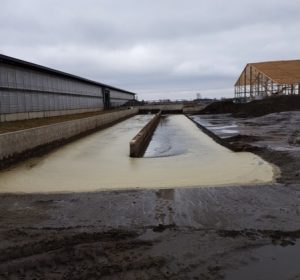 However, increasing stocking density on one farm to 110% to prepare for expansion had reduced yield by 3kg/cow. Sand was the predominant bedding system and was reclaimed using a sand lane system where the slurry was effectively washed repeatedly in a channel, the gradient of the channel meant that the sand settled out and could be removed before being reused after around 6 weeks.
 Did you know?
  temperatures getting hot enough to use these systems for a few days in the summer. However, fans switched on at 15-18°C and soakers at 21°C, with farmers reporting a clear benefit at these temperatures.
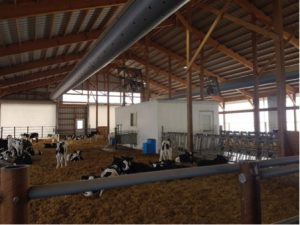 During the trip we had the opportunity to visit a large robot farm, 36 robots housed under one roof! The cows were grouped in 180’s with 3 robots to each group, averaging 36kg/day. The shed was ventilated using 100 fans situated down one side of the shed drawing air through. The unit cost roughly $7000/stall to build and he plans to install another 12 robots in the next few years. The calf rearing part of the enterprise was even more impressive. Calves were reared in groups of 60 on automatic feeders and used whole milk with a protein supplement, at 3 weeks they were drinking 13 litres on average and were 120kg bodyweight at 9 weeks of age.