
IMPACTION COLIC: SIGNS, TREATMENT AND PREVENTION
What is colic?
Colic is the term used to describe ‘abdominal pain’ in horses. Fortunately, most colic cases we see are medical colics in particular spasmodic/gas colic. Other forms of medical colic include impaction colic and colon displacements to name but two. Luckily, less than 10% of colic cases we see require surgical intervention.
What are the signs of colic?
- Restlessness
- Pawing at the ground
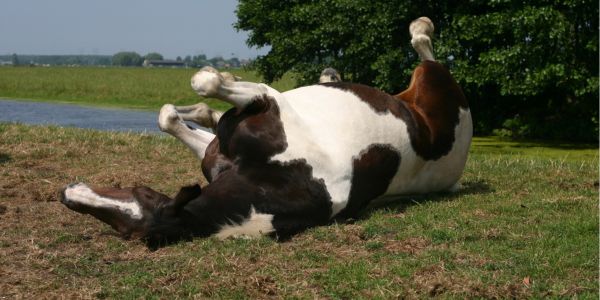
- Rolling
- Kicking and/or looking at belly
- Lying flat out
- Sweating
- Stretching/unusual posture
- Poor appetite
- Reduced droppings
- Lip curling
- Teeth grinding
What should I do if my horse is colicking?
- Remain calm and keep safe
- Remove food
- Walk in hand ideally in a sand paddock provided it is safe to do so
- Speak to your vet for advice
- Do not give any pain-relief or other drugs unless instructed to do so by your vet
What is impaction colic?
Impaction colic is a form of colic we see more commonly at this time of year and occurs when gut contents become ‘stuck’ in the colon. Horses generally present with low grade signs of abdominal discomfort but with a history of a reduced appetite and reduced/absent faeces.
How is impaction colic diagnosed?
The diagnosis is based on a combination of historical information, symptoms and veterinary examination. A rectal exam is required to definitively diagnose the impaction.
What is the treatment for impaction colic?
1. Fluids!
- Water and electrolytes are the best way to help soften and shift impaction colic. These are usually delivered via a nasogastric tube which is passed up your horse’s nose and down into their stomach.
- Water buffet – ensure your horse has plenty of water to drink
- Depending on the severity of the impaction repeat tubings is often required at 2–4-hour intervals. Therefore, hospitalisation is required in some cases.
2. Starve!
- The vet will ask you to remove any hay/haylage/grass. This will stop the impaction getting larger in size.
3. Pain relief
- Your vet will give your horse injectable pain relief to keep them comfortable whilst we attempt to clear the impaction.
What can I do to prevent impaction colic?
- Keep up to date with routine dentistry.
- Ensure your horse follows a worm control plan.
- Ensure any dietary changes are made gradually over a 10-14-day period.
- Monitor water intake to ensure your horse is drinking plenty. In winter ensure your horse’s water is not frozen. Consider adding warm water to your horse’s bucket feeds to increase intake. A salt lick should also be provided to stimulate thirst.
If you are concerned your horse is showing signs of colic, please do not hesitate to contact the team. At least two of our Oakhill Equine Vets are on call 24/7, 365 days/year.