Call Us
Goosnargh:
Lytham Road:
Kirkham:

Coronavirus update for our Small Animal Clients

In these uncertain times we would like to reassure you that providing care for our clients and their pets remains our top priority.

Our practice REMAINS OPEN FOR BUSINESS but as you would expect we are putting in place a number of steps to protect the health and wellbeing of our patients, staff and the wider community.

  • We would encourage that only one person attends with the pet – this will help minimise the number of people in our waiting rooms.
  • If possible once you have let reception know that you have arrived it may be more suitable to wait outside or in your car.
  • It may be possible that follow up appointments, including repeat prescriptions, could be conducted via telephone consultation with /without emailed photos/videos- please contact the reception team to discuss appointment slots and payment options.  

Unfortunately, not all conditions can be assessed in this way and after discussion with the vet you may still be required to bring your pet in. Routine preventative healthcare appointments may not require you to attend the surgery our team will help guide you with this. In most instances medicines will need collecting from the branches but a postal service may also be available if necessary.

  • If you are in self-isolation but your pet needs treatment, please allow a family member or friend to bring them in. If this is not possible, we can meet you outside our entrance to receive your pet.
  • House visits are now only possible in exceptional circumstances and will require discussion with a vet before arrangement.
  • Take as many preventative measures before, during and after your visit -this includes washing your hands regularly and thoroughly with soap and water , please make use of the hand sanitisers in our branches and avoid touching your eyes, nose and mouth. Use tissues to catch coughs and sneezes, then throw the tissue in the bin.
  • For hygiene reasons, we would encourage payments by card rather than cash.
  • Please allow at least 48hrs for orders of repeat prescription medicines and foods as our suppliers are running with reduced staffing and deliveries are at reduced frequency.
  • Our Saturday morning surgery at Kirkham will not be running until further notice, however all our other opening hours remain unchanged.

We will update our plans regularly based on information released by the UK Government, NHS and the RCVS and will keep you updated on our Website and via Facebook.Please share this information with others that have pets that may not have access to technology.

Thank you for your support over the coming days and weeks – we will continue to be here for you and your pets.
Notice: Saturday Surgery Kirkham

Due to unforeseen circumstances, we are very sorry to announce but until further notice, we are unable to hold our usual Saturday morning surgery at our Kirkham branch.

There will still be a surgery held at our Conway Drive branch at 93 Conway Drive, Fulwood, Preston, PR2 3ER (Call: 01772 718774) from 8.00am-2.30pm (by appointment only).

Our other opening times remain unchanged at present:

Mon- Fri 8.00am – 7.00pm at all branches
(by appointment only)

Sunday 9.00am-12.00pm at 220 Watling Street Road, Fulwood, PR2 8AD (Call: 01772 700671 – by appointment only)

Bank Holidays 9.30am – 11.30am at Conway Drive

Thank you for your understanding

Mission Christmas Gift Appeal

Once again Oakhill Veterinary Centre will be taking part in Rock FM’s Mission Christmas Gift Appeal 2019, in aid of Cash for Kids, who make sure Christmas gifts get to disadvantaged children in the area.

All 4 of our branches will be gift collection points.

If you’d like to donate a gift, it should be new and unwrapped (no food or chocolate please) and be with us by Monday 16th December at the latest so we can get them to Mission Christmas HQ in time.

Further information is available on the link below, including gift ideas (from birth to 18 years):

https://planetradio.co.uk/rock-fm/charity/events/mission-christmas-lancashire/

Thank you!

Your Dog’s Dental Health

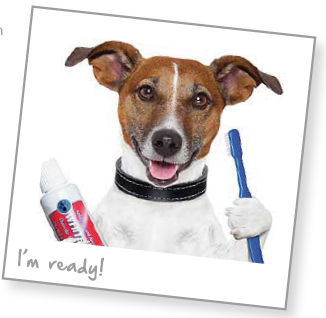
Your dog’s dental health is really important.

Why do you need to brush your dog’s teeth?

Food particles and bacteria collect along a dog’s gum line and form soft deposits called plaque. Over time, the plaque turns into rock-hard tartar. If tartar is not removed from the teeth, it will eventually inflame your dog’s gums causing pain, therefore looking after your dog’s dental health is really important.

As the inflamed gums begin to separate from a dog’s teeth, pockets form in which more bacteria grow, causing periodontal disease to worsen. At this point, dogs can experience severe pain, lose teeth, and form abscesses in their mouth.

Your dog will not be able to tell you if they are in pain or have toothache.

Dogs can develop a bacterial infection that can spread through the bloodstream to the kidneys, liver, heart or brain causing more widespread illness and disease.

Periodontal disease is irreversible, so now is a great time to get started on a regular oral-care regime for your dog. Prevention is the key to keeping dogs healthy and happy.

You will reduce the chances of putting your dog through an anesthetic and  dental surgery later in life if you look after their teeth. They would prefer not to have an operation and you will save lots of money!


The equipment you will need: 

  • A pet toothbrush with medium bristles (or a finger brush initially).
  • A quiet area with few or no distractions.
  • Plenty of patience.
  • Dog toothpaste – human toothpaste is toxic to dogs.
  • Some water.
  • You can get a toothbrush kit from any of our surgeries.

Step by Step Guide:

Dog tooth brushingGet your dog used to the toothpaste 

  • Wash and dry your hands and smear a little bit of dog toothpaste on your index finger.
  • Let your dog lick the toothpaste from your finger.
  • Repeat two or three times a day.
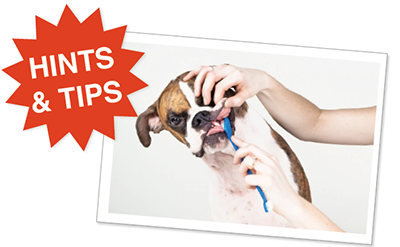
  • Once your dog is eating the toothpaste well off your finger, begin to start lifting your dogs lips and holding their muzzle. Your dog needs to get used to you touching their mouth (This may take some time, as it can be quite worrying for your dog at first, ensure you do not force or restrain them and that they are happy with being held).
  • Move on when your dog is happy with you touching and holding their mouth and eating their special toothpaste.

Get your dog used to having something in their mouth 

  • Smear your index finger with toothpaste.
  • Gently rub your finger over your dog’s teeth and gums.
  • Do this slowly and do not put your finger in further than your dog is comfortable with, and take care with your fingers please.

Introducing your dog to the toothbrush 

  • Wet the toothbrush with water and then smear it with toothpaste on top of the bristles.
  • Let your dog lick some of the toothpaste off the bristles to get used to the feeling.
  • Gently hold your dog’s mouth around the muzzle to get them used to you holding their mouth and do not let your dog chew the brush.
  • Put your hand across your dog’s nose and lifting their lips, gently brush their canines (the big, pointy teeth) up and down.
  • Start by angling the brush towards the gum line and brush away from the gum towards the tip of the tooth.
  • At this stage avoid the incisors (the small teeth at the front of my mouth) and holding the front of your dog’s nose, as this is the most sensitive area of their mouth.

Brushing your dog’s back teeth 

  • Start with brushing your dog’s Canine teeth up and down as above.
  • Slowly move along to the teeth behind the canines, using a circular motion.
  • Only go as far as your dog is happy with and brush both sides of their mouth.

Brushing all of your dog’s teeth 

  • Always start with the Canine teeth and then the back teeth, and we will finish with brushing the sensitive incisors (your dog may sneeze when you brush their incisors!).
  • To brush the front incisor teeth, hold your dog’s mouth around the top of the muzzle and gently lift the upper lip with your thumb and forefinger, to reveal the incisor teeth.
  • Gently brush the front teeth up and down.
  • Gradually build up the amount of time you spend brushing until you reach two to three minutes. For maximum protection, brush every day, if you can.

Hints & Tips

  • Dog dental tipsKeep your sessions short – 3 minutes is plenty twice a day once your dog has been trained to have their teeth brushed.
  • Your dog is an individual, go at their pace and please remember to give them lots of praise.
  • Use three pea-sized blobs of dog toothpaste – one each for the left, right and front of the mouth.
  • Take care putting your fingers into my mouth.
  • If your dog is aggressive or prone to biting, do not try to brush their teeth (please seek advice from a behaviourist).
  • Repeat each stage for approximately five days before moving to the next step so your dog is comfortable and understands each stage.

Don’t hesitate to speak to one of our vets or nurses about your dog’s dental health.

Our Registered Veterinary Nurses offer free pet dental checks and are a valuable source of advice.

PetPlan Veterinary Awards 2020

The PetPlan Veterinary Awards 2020 are now open!

2020 marks an amazing 21 years of these awards celebrating excellence within the veterinary industry.

The Petplan Veterinary Awards recognise the fantastic work that goes on in veterinary practices across the UK. Petplan has worked closely with the veterinary profession for over 40 years and hosts these independent industry awards to recognise the hard work and dedication of veterinary staff caring for our pets.

If you think that the Oakhill Veterinary Centre practice or someone in our practice team deserves to win, click here to complete the nomination form.

Thank you!

Sneaky peek at our new small animal facilities?

Join us for a behind-the-scenes look at the brand new small animal facilities at our Goosnargh branch on:

Sunday 13th October 2019
1pm – 4pm

at Oakhill Veterinary Centre, Langley Lane, Goosnargh, PR3 2JQ

  • Practice tours 
  • See behind the scenes at your local vets
  • Meet the team
  • Refreshments
  • Demonstrations
  • Children’s activities

PLUS there’ll be a FREE PRIZE DRAW to be in with a chance of winning a Chocolate Hamper!

We hope you can join us!

Pippa – Patent Ductus Arteriosus

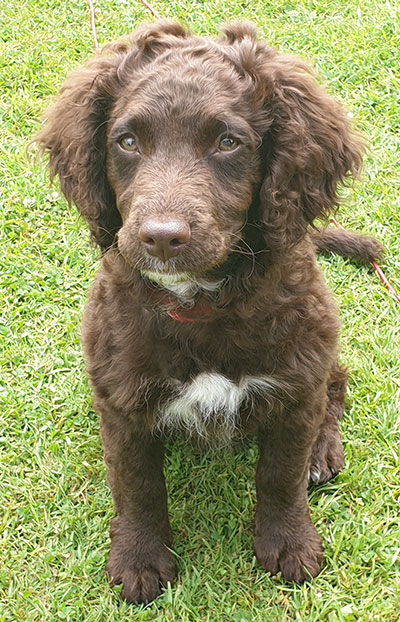
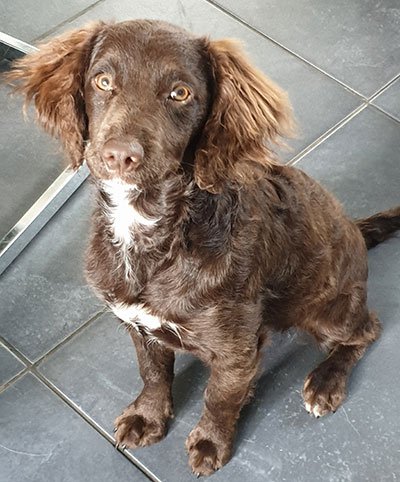
PippaPippa, a beautiful Cockerpoo, was diagnosed at 4 months of age with a serious congenital heart defect known as Patent Ductus Arteriosus (or PDA for short) after a heart murmur, that was picked up during her initial vaccination appointment, failed to disappear.
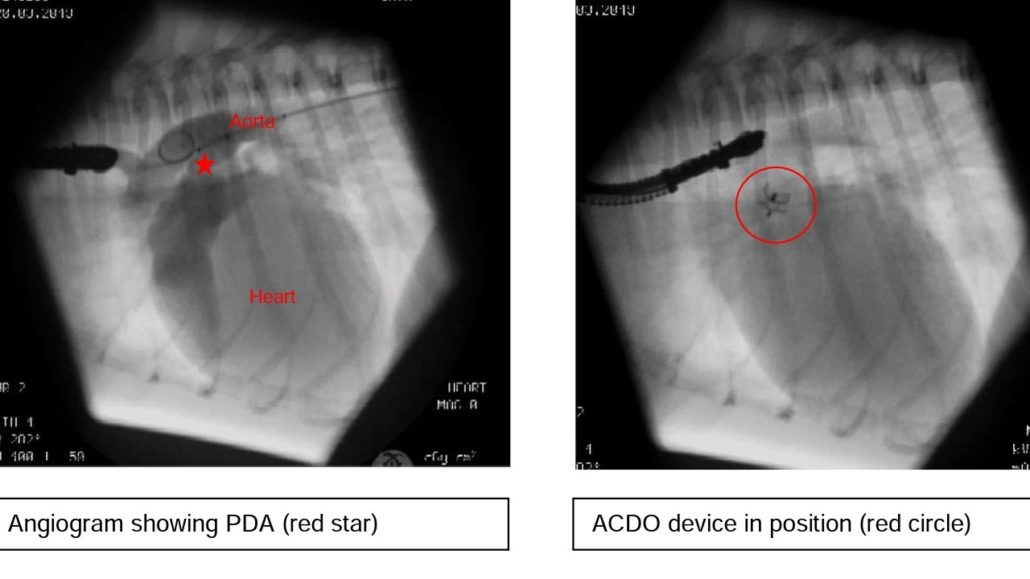
A PDA is caused by a blood vessel that connects the body’s major artery (aorta) to the main vessel that supplies the lungs (pulmonary artery) failing to close after birth as it should normally do. This can lead to poor growth, damage to the lungs, heart failure and ultimately death with 50% of cases not even seeing their 1st birthday.

Pippa’s diagnosis was made at our Conway Drive branch by vet, Giles Lambert, performing an ultrasound scan of her heart which showed the PDA and the abnormal blood flow that it was causing. The scan also revealed that her heart was already becoming enlarged because of the PDA, a worrying sign that heart failure would develop if left for too long.

Fortunately for Pippa she was able to be referred to specialists at Liverpool University’s Small Animal Teaching Hospital. A month after her diagnosis she underwent an operation to place a small device into the PDA (via a catheter in one of her back legs) to stop blood flowing through it.

Pippa PDA Angiogram

Pippa PDAThe procedure has been a complete success so far and Pippa can hopefully now look forward to a completely normal and lengthy life!
Thank you to Pippa’s owners for letting us share her story.

RCVS Accredited


RCVS accredited – What does that mean?

What is the Royal College of Veterinary Surgeons’ Practice Standards Scheme?


The Practice Standards Scheme (PSS) is a voluntary accreditation scheme for veterinary practices. It was set up by the Royal College of Veterinary Surgeons (RCVS) in 2005 to promote and maintain high standards in veterinary care. The Scheme does this by setting standards and inspecting the practices that choose to take part.

RCVS Accredited Practice LogoAll RCVS-accredited practices have to meet Core standards, including hygiene, health and safety, clinical governance and the facilities provided. On top of this ‘Core’ accreditation, General Practices can gain species – or discipline-specific accreditations, for example, small animals, farm animals, equine patients.
Oakhill Veterinary Centre is RCVS accredited for all 3 divisions (small animal, farm animal and equine).


To maintain the accreditation, practices are inspected by RCVS Assessors every four years and there are random spot checks.

[youtube id=”fPmkfznoX88″ width=”600″ height=”350″ autoplay=”no” api_params=””]


It can be hard for owners to know what happens behind the scenes at the vets so the scheme can reassure people about hygiene and facilities available at an individual practice.

If you have any questions about the RCVS Practice Standards Scheme you can visit their website: https://animalowners.rcvs.org.uk/accredited-practices/about-the-practice-standards-scheme/

Veterinary Nursing Awareness Month!

Outside of the consulting room, most of the attention and medical care your pet receives is at the hands of a veterinary nurse. It is this we celebrate each May, as Veterinary Nursing Awareness Month (VNAM) gives us an opportunity to talk about our role in caring for your pets.

In any given day a veterinary nurse may find themselves taking x-rays, medicating patients, doing consults, maintaining equipment, monitoring anaesthetics, dressing wounds, answering phones, and the list goes on!

The title “Veterinary Nurse” is not yet protected in law (meaning anyone can use it), but it is advised by the Royal College of Veterinary Surgeons that it should be taken to mean only Registered Veterinary Nurses (RVNs). Our RVNs have undertaken a rigorous training programme, sat examinations, and are subject to a Code of Conduct, which includes a disciplinary process if a grievance should arise. We continue to study, and log professional development hours to maintain our Registration throughout our careers. Some RVNs undertake specialist training in a range of topics, especially the care of exotic pets, canine behaviour, advanced nursing and more. There are several different routes to becoming a veterinary nurse, and BVNA can provide you advice on the career and studying, if you are interested in pursuing this career.

The British Veterinary Nursing Association (BVNA) represents RVNs and promotes responsible pet care to the general public through Veterinary Nursing Awareness Month (VNAM). During VNAM you may see a display in your local practice, or an event in your town or village. This is a chance for us to interact with our clients and the public, so don’t be shy – ask about what your RVNs do, and their special interests. You may find they can help you with a pet problem you have been having. Also, RVNs usually have pets themselves, and love to talk about them just as you do!

Did you know we have 12 fully qualified RVN’s at Oakhill Veterinary Centre!

https://www.oakhill-vets.com/nurse-clinics/

Injured cat found at local scrap yard

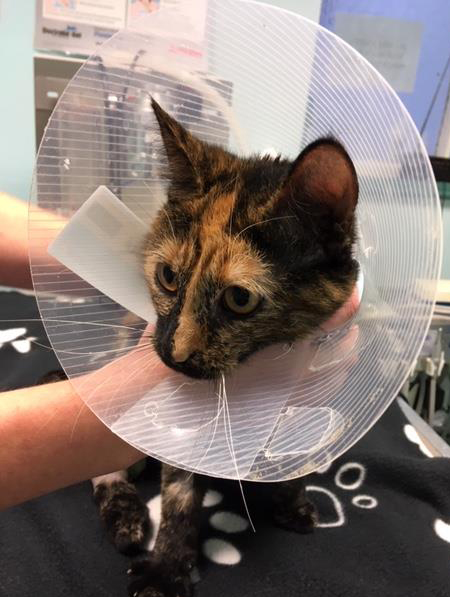
Two year old Bonnie was recently found with some serious injuries, under the bonnet of a scrap car at a local recycling plant.
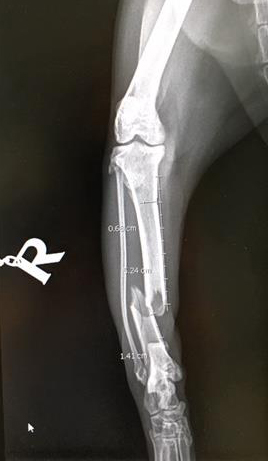
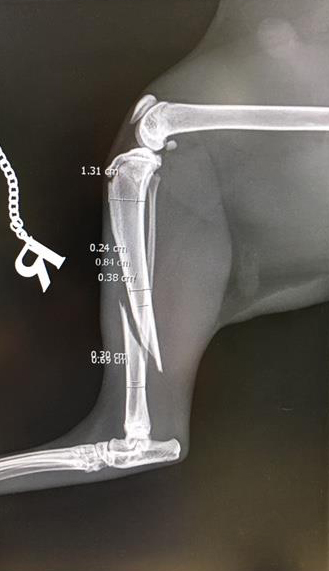
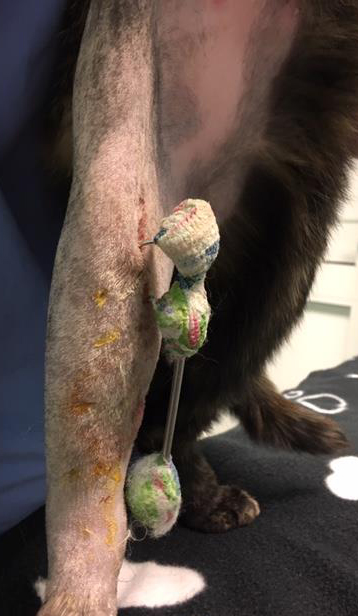
Bonnie was brought to our Conway Drive surgery with a fractured tibia, broken canine tooth and some wounds around her face.

Unfortunately Bonnie is not microchipped, so local charity, Lancashire Cat Rescue, agreed to take her in.

The first stage of Bonnie’s treatment was for our vets to repair Bonnie’s leg with pins and an external frame to stabilise the fracture – see images.

The next stage planned is to remove Bonnie’s broken tooth when she has post op radiographs in 6 weeks time.

Bonnie is now recuperating with Lancashire Cat Rescue.