
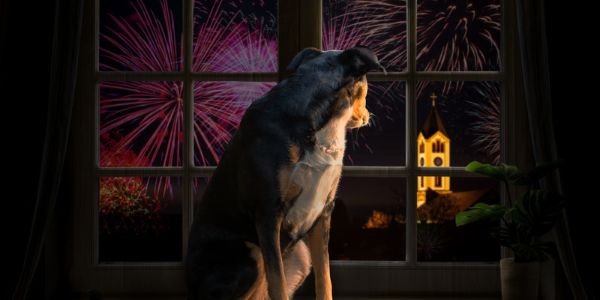
FIREWORKS SEASON SURVIVAL GUIDE FOR PETS AND THEIR OWNERS
Fireworks may be spectacular to us but for many cats, dogs, and small animals, they can feel like sudden, terrifying explosions. With their sensitive hearing and heightened awareness, what seems just noisy to us can be overwhelmingly frightening to them. It’s not unusual for pets to respond with distress, panic, or even attempts to flee during fireworks.
Even if your pet isn’t naturally ‘nervous’ they might still find fireworks stressful. Some signs of anxiety are obvious, while others can be easier to dismiss. Signs of discomfort to look out for include:
- Trembling or shaking
- Hiding
- Excessive vocalising (barking, meowing)
- Involuntary urination or defecation
- Panting when they’re not hot or drooling
- Repeatedly checking windows
- Pacing or struggling to settle
- Suddenly wanting to stay very close
- Refusing food
- Becoming destructive
It can be heartbreaking to see, but there are things you can do to support them and reduce their stress. Below are practical strategies to make firework nights less traumatic for your pet.
1. CREATE A SAFE SPACE
Give your pet a quiet, comfortable hideaway where they can escape the noise whenever they need to. This could be a covered crate, a cosy spot under a table or a cardboard box filled with familiar bedding. Add their favourite toys and something carrying your scent for extra comfort. Introduce their den well in advance so it feels like a familiar, safe place rather than somewhere new to hide when they’re frightened.
2. KEEP NOISE AND FLASHES TO A MINIMUM
Close windows and curtains to reduce the impact of loud bangs and bright flashes. Having the television or music on – background “white noise,” classical music, or pet-friendly playlists – can help to mask sudden bangs. Take dogs for their walk before dark and bring cats indoors well before fireworks are expected. For rabbits and guinea pigs, consider moving outdoor accommodation to a suitable sheltered area, such as a shed or garage, if it’s safe to do so. Provide extra bedding and noise protection while maintaining good ventilation and avoiding overheating.
3. OFFER REASSURANCE AND STAY RELAXED
Your pet will take cues from your behaviour, so try to keep things as calm and predictable as possible. If they seek comfort, it’s fine to offer gentle reassurance – you won’t reinforce their fear simply by comforting them. Let them choose whether they want company or prefer to hide away and never force them out of their safe space. Keep your usual routine where possible, offer a favourite activity if they’re receptive, and give them time to settle at their own pace.
4. EXPLORE WAYS TO EASE ANXIETY
There are various products that may help pets cope with stressful situations, including pheromone diffusers, calming sprays, supplements and anxiety wraps for dogs. Some need to be introduced well ahead of time to allow them to take effect, so check the manufacturer’s guidance and plan early. Food puzzles, chew toys and lick mats can also offer a welcome distraction for dogs.
5. ASK FOR VETERINARY ADVICE IF NEEDED
If your pet usually becomes particularly distressed or you’re unsure how they will cope, speak to us before fireworks season begins. We can discuss suitable options to help manage their anxiety and make future events more comfortable. A little preparation now can make a big difference when the bangs begin. If you’re worried about how your pet will cope this Bonfire Night, our team is here to help.
A tailored approach may make a real difference during stressful nights. By planning ahead and creating a controlled, safe environment, you can help your pet feel more secure during firework season. Your support and calm presence will go a long way toward turning a night of fear into one of comfort.
IMPORTANT REMINDER
It’s best never to take your pet to firework displays or bonfire nights – the unpredictability, crowds, and noise make them a source of potential trauma rather than enjoyment.