
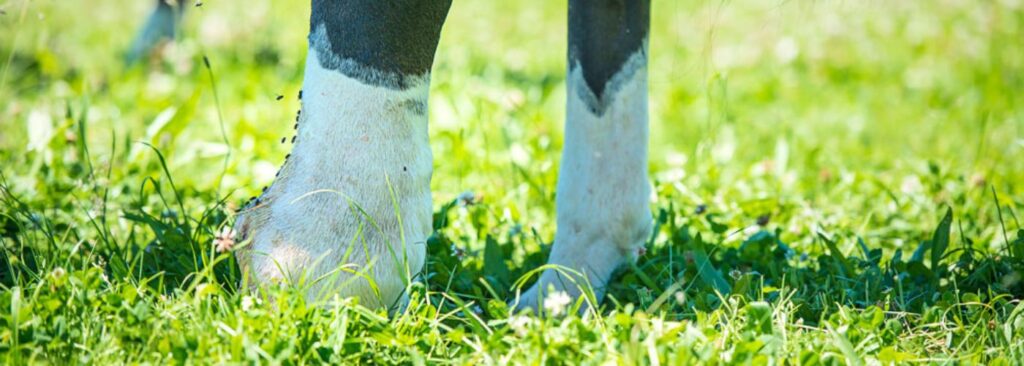
WHAT IS CELLULITIS?
A lot of horse owners will be familiar with the term cellulitis, but what does it mean?
Cellulitis is a bacterial infection of the skin and the subcutaneous tissues that is associated with a hot and painful swelling of the affected area. It is most commonly seen on legs but can occur anywhere on the body and is usually associated with either a wound (even a tiny pinprick from a thorn can be enough!) or prolonged exposure to the rain/mud leading to skin softening.
Horses with CPL or feather mite infestations are also more likely to develop cellulitis. Cellulitis will often present with lameness, a hot localised swelling that is painful to touch and occasionally a high temperature (>38.5 degrees Celsius).
LYMPHANGITIS
Lymphangitis is inflammation of the lymphatic vessels within the leg and is usually a more severe presentation; the horse is often extremely lame, with a high temperature and a massively swollen leg from hoof to elbow/stifle (often described as a tree trunk).
Treatment for both involves anti-inflammatories and antibiotics, but depending on the severity of the condition your vet may choose to add in steroids or intravenous medications.
Immediate treatment is very important as the longer the condition goes on, the damage done to the lymphatic vessels is greater and can be permanent. For mild cellulitis cases, horses may never see another episode again – however, for more severe cellulitis/lymphangitis cases recurrence is common.
It is important to note that not every swollen limb is cellulitis, but if you’re ever unsure just give us a call and have a chat with one of our vets about your worries.
HOW TO MINIMISE THE LIKELIHOOD OF YOUR HORSE DEVELOPING CELLULITIS/LYMPHANGITIS:
• Keep the horse moving: exercise improves lymphatic drainage and circulation to and from the legs
• Minimising time spent standing in deep mud/sand
• Clean and cover wounds where possible
• Treating mite infestations
• Thoroughly drying legs after washing/rain
• Stable bandaging legs if stood in for a long period of time/if the horse is predisposed to limb swelling when stabled